Mumbai
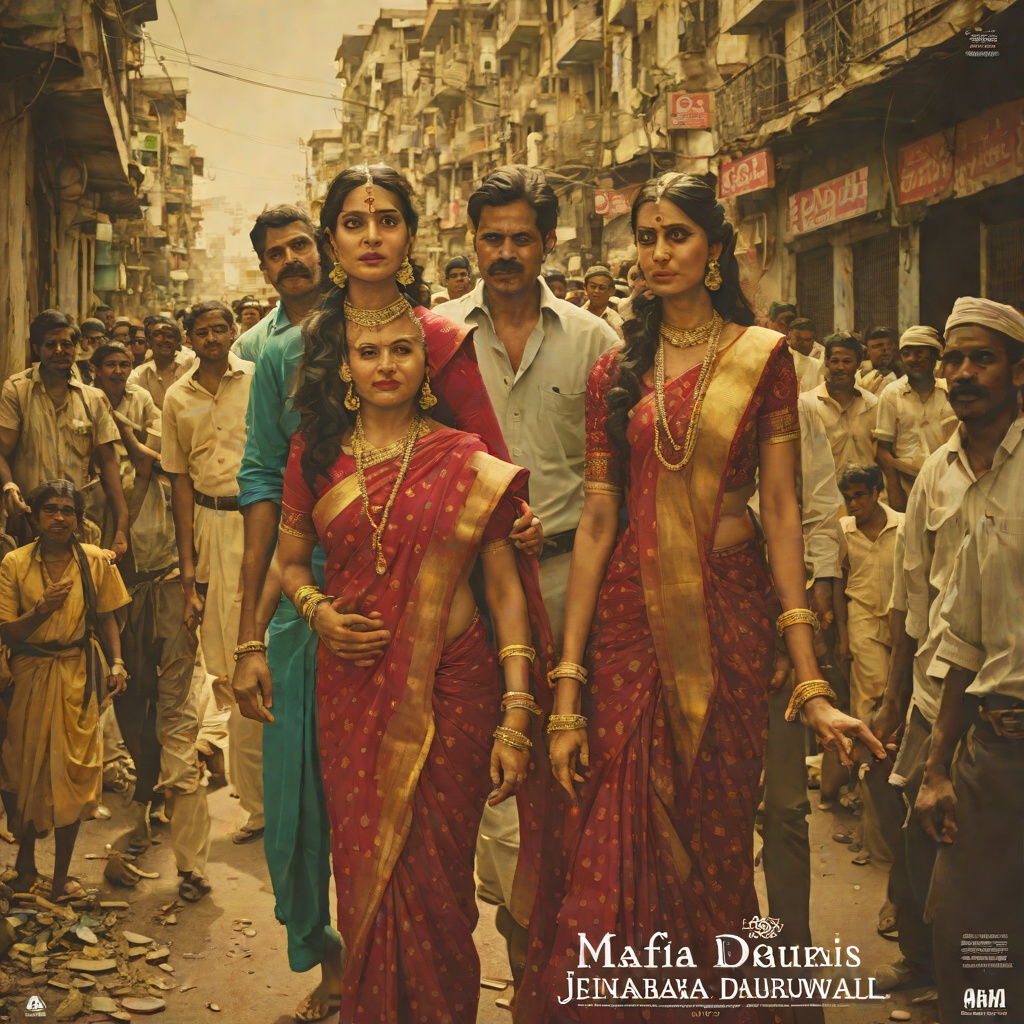
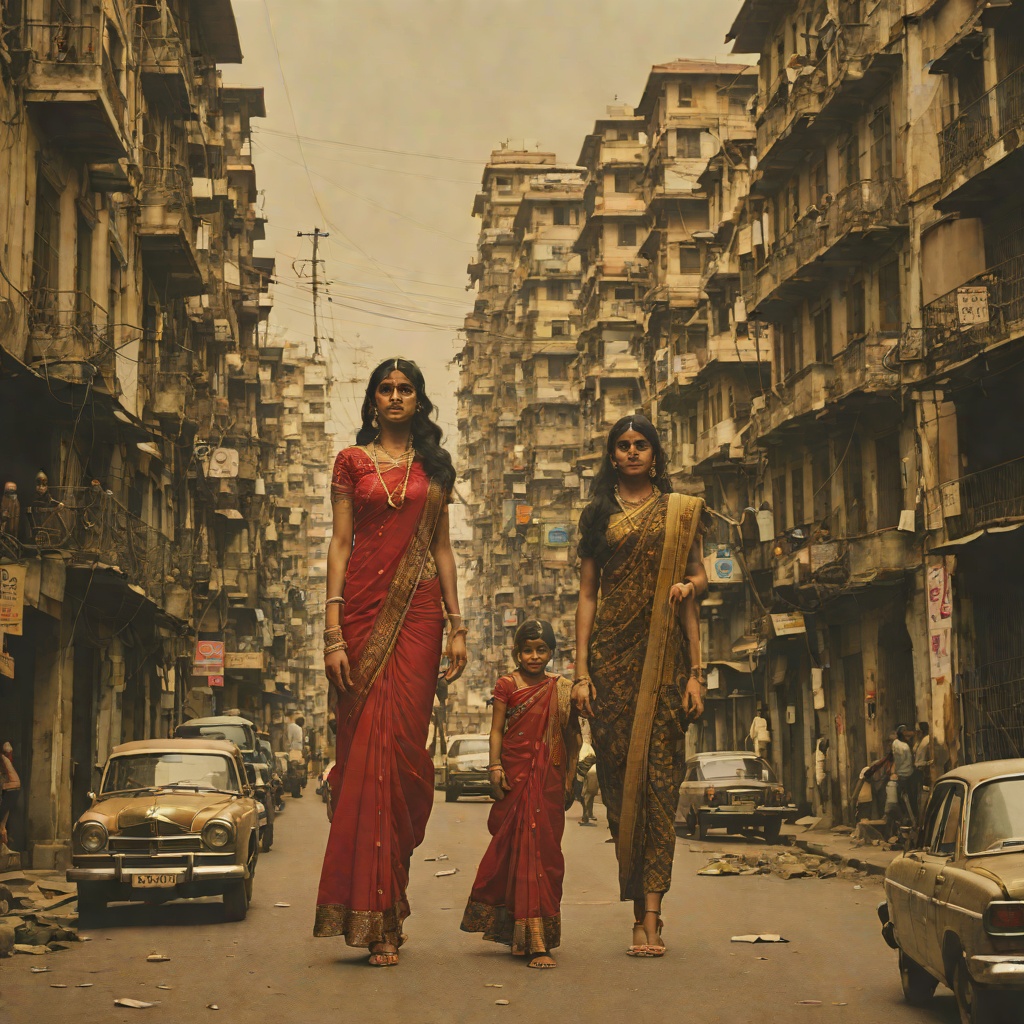
Mafia Queens of MumbaiMumbai, the city of dreams, is the sprawling, contradictory heart of this chronicle of the Indian underworld. It is a place where the shimmering Arabian Sea meets the grim reality of graveyards, where colonial legacies persist in street names and legal codes, and where the city's geography—its islands, its reclaimed lands, its dense slums—directly shapes the criminal empires and the lives of the women who rise within them. The book presents Mumbai not as a passive backdrop but as an active protagonist, its spaces and histories determining the fates of gangsters, molls, and matriarchs alike.
A City of Colonial Legacies and Island Origins
The city's modern identity is built on a foundation of British imperial planning. The name Marine Lines, for instance, is a direct throwback to the mid-nineteenth century, when the British put Mumbai on the trade route by linking it with a network of railheads. The area takes its name from the Marine Battalion Lines, a British military establishment that was later converted into air force residence quarters, still visitable just south of Metro Adlabs. The railway station itself is so close to the sea that only a road, V. Thackersey Marg, separates it from the famous Marine Drive promenade. This colonial infrastructure, however, sits uneasily alongside older, more organic layers of the city's history. Dongri, a stone's throw from the cloth market in Kalbadevi, was initially part of the original island of Mumbai, which stretched from Malabar Hill to the Dongri hills. In the mid-1700s, the Dongri hills were levelled as part of the plan to merge the city's seven islands—Colaba, Old Woman Island, Mahim, Parel, Worli, and Mazgaon—into a single landmass. After the hills were levelled, the low-lying patch of uneven land between Crawford Market in the north and the reclaimed lands of Kamathipura in the south came to be called Dongri. This history of physical transformation—of hills razed and seas reclaimed—is the very ground upon which the city's modern underworld would later be built.
The Geography of Crime and Community
By the time of the book's narrative, Dongri has become a predominantly Muslim enclave, choc-a-block with rickety, old buildings, partially falling below the gigantic JJ Flyover. Its bazaars spill onto the footpaths with audio and video tapes of Islamic teachings, attar, henna, and jewellery, while the aroma of hot kebabs and biryani permeates the late afternoons. To an outsider, the Urdu signboards and the rows of men kneeling outside mosques make Dongri seem like another country in itself. Until the mid-1990s, this place was known for all the wrong reasons, as a venue for endless gang wars and communal bloodshed. Yet this same neighborhood was once a hub for the independence movement, where both men and women, regardless of religion, took to the streets for freedom. This duality—a place of both political idealism and criminal violence—is central to understanding the city. The city's criminal geography extends far beyond Dongri. Sonapur Lane, also called Sonapur Galli, lies just a stone's throw from the Reay Road railway station, where some thousand shanties nestle as a nesting ground for crime and disease. The name 'sona' in Sonapur does not refer to 'gold' but to 'death' or 'sleep', owing to the several Muslim graveyards in the vicinity. Yet for one woman, Jyoti Adiramalingam, this area brought gold and untold wealth, establishing her as the reigning godmother who lays down the rules. Similarly, the Sion-Koliwada slum, built on a hill that leads to a Hindu temple, was infamous for its illicit hooch distillery owned by Vardharajan in the '80s, and later notorious as a drug den under Mahalaxmi Papamani. The market area of Antop Hill, bustling with vendors and locals conversing in Tamil, feels like a small town in Tamil Nadu transplanted into central Mumbai, a testament to the city's role as a magnet for migrants from across India.
The City as a Hub of Transnational Crime
Mumbai's position as a global trade hub has always been shadowed by its role as a center for illicit commerce. The city's docks, where coolies unloaded boxes from ships coming from Aden, Dubai, and Hong Kong, were the launching pad for the smuggling empires of the mid-twentieth century. It was here that Haji Mastan, originally from Chennai, started as a cycle-repairing mechanic before moving to the docks as a coolie in 1944, eventually making millions from smuggling gold, silver ingots, and electronic goods. This transnational flow of goods and people extends beyond the city's ports. The journey to Birganj, a hub for cross-border smuggling of arms, electronic goods, drugs, and fake currency, begins with a trip to Raxaul, a small town in Bihar, before taking a bus across the border. The city's criminal networks are thus woven into a larger web of global capitalism, connecting Mumbai to Kathmandu, Dubai, and beyond. Even the city's airport, Chhatrapati Shivaji International Airport, serves as a stage for this transnational drama. It was here that gangster Abu Salem was finally returned to the city that had given him his livelihood when he landed from the boondocks of Azamgarh in Uttar Pradesh, the city that had brought him notoriety and elevated him to gangster status. The airport was also the site of the fake encounter killing of Mehmood Khan, a wanted gangster shot dead in an encounter, a lie that his wife Ashraf immediately recognized, knowing he could not have carried a gun past airport security.
The City's Laws and Their Uneven Enforcement
The city's legal landscape is as layered and contradictory as its geography. Prohibition, central to Mahatma Gandhi's and the Congress's agenda, was introduced in the city on 1 August 1939, two years after the first Congress ministry was created in the Bombay province. The law-enforcers faced problems in the very first week, with clashes between groups for and against prohibition. The home minister at the time, Barrister K.M. Munshi, carried out an intensive recruitment programme in the police force, creating an exclusive cadre called the X Division headed by a DCP, Prohibition. However, when the Second World War broke out in 1939, the mammoth prohibition force was diverted for security measures to the docks, and the implementation of prohibition suffered. This pattern of exceptional laws and their selective enforcement continued into the modern era. MCOCA, a stringent law promulgated by the Maharashtra government in 1998 after the abrogation of TADA, was formulated because the state did not have any firm law with which to fight organized crime. Later, the Gujarat and Delhi governments used the same law to control criminal gangs. These laws, inherited from colonial and postcolonial state practices, disproportionately affect marginalized communities, criminalizing entire neighborhoods and enabling extrajudicial practices like the 'encounter' killings that the book documents.
A City of Contrasts and Communal Shadows
The city's identity is also defined by its moments of crisis. In January 1993, just a few years before the island city of Bombay became Mumbai, the city of dreams was suddenly shrouded by the communal shadows of the past. Tremors of the demolition of the Babri Masjid in Ayodhya on 6 December 1992 had caused violent aftershocks, leading to politically-motivated and planned rioting between Hindus and Muslims. The riots led to the systematic slaughtering of people from both communities, with several hundreds killed and thousands rendered homeless. Mumbai was literally burning in the fire of religious discord. Yet even in these dark times, the city's spaces became sites of resistance and solidarity. When anti-prostitution sentiment swelled in Kamathipura, sex workers sought Gangubai's help, and she successfully spearheaded the movement against their evacuation from the belt. Her political connections won her an appointment with the then prime minister of India, Jawaharlal Nehru, at his residence in New Delhi, making her the only local brothel madam to secure an appointment with the head of the country. The city, for all its violence and inequality, also enabled such moments of individual agency and collective action, where women like Gangubai, Asha Gawli, and Mahalaxmi Papamani could carve out their own domains of power within its crowded, chaotic, and endlessly resourceful streets.